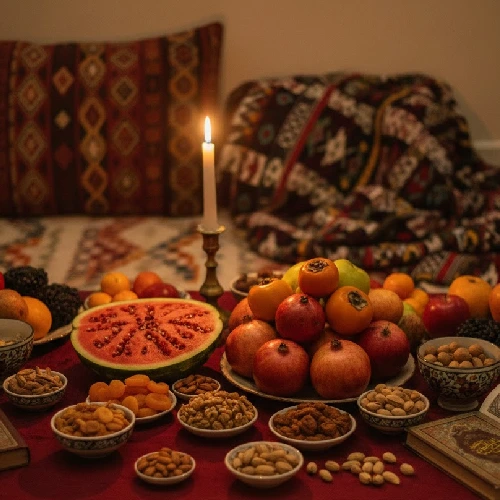
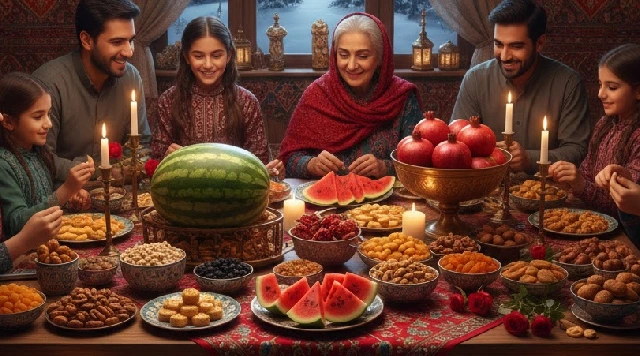
The Triumph of Light: An Ancient Persian Winter Solstice CelebrationOn or around December 21st, as the calendar marks the winter solstice, families across the Persian world prepare for Shab-e Yalda (Night of Yalda), also known as Shab-e Chelleh (Night of the Forty). This is the longest and darkest night of the year, and for thousands of years, Iranians have celebrated it not with dread, but with joyous vigil—a determined gathering to protect the light, anticipate the sun’s rebirth, and welcome the inevitable shortening of the nights that follow.The word Yalda itself comes from the Syriac language, meaning "birth," and it symbolizes the birth of the Sun God, Mithra, harkening back to Zoroastrian traditions where light and goodness triumph over darkness and evil.The Grand Gathering: Family and WarmthThe central tenet of Yalda Night is togetherness. The tradition is to gather at the home of the eldest family members—often the grandparents—to spend the entire night awake, ensuring that the darkness passes in the company of loved ones.The Setting: Homes are cozy and bright. Historically, families would gather around a korsi, a low table with a heater underneath and thick blankets draped over it, where guests would tuck their legs for warmth.The Vow: By staying up together, sharing light, and sharing food, the group wards off the forces of darkness and misfortune associated with the longest night.The Table of Symbols: Colors of the SunThe Yalda Night table is a feast for the senses, carefully arranged with fruits and nuts that carry deep symbolism, particularly their vibrant red colors, which represent the crimson hues of dawn and the glow of life.SymbolMeaningRole in the NightAnār (Pomegranate)Fertility, Life, and the Rising Sun.Its numerous seeds symbolize abundance and prosperity. The deep red color is paramount.Hendevāneh (Watermelon)Health and Warmth.Eating this cool, summer fruit is believed to immunize the body against the winter's cold and the heat of the next summer.Ajīl-e Yalda (Mixed Nuts)Prosperity and Good Fortune.A platter of walnuts, pistachios, almonds, and dried fruits is eaten throughout the night for energy and good luck.Candles/LampsLight, Hope, and the Triumph over Darkness.Every home is brightly lit, echoing the theme of welcoming the longer days.The Poetic Fortune: Fāl-e HāfezPerhaps the most famous and romantic ritual of the night is Fāl-e Hāfez (taking a fortune from Hafez).The eldest member of the family opens the Divān-e Hāfez (a collection of poems by the 14th-century Persian poet, Hafez of Shiraz) at random. Before the page is opened, someone makes a secret wish or asks a question in their heart. The poem on the chosen page is then read aloud and interpreted as divine guidance or a poetic answer to their question for the coming year.This act transforms the longest night into a night of spiritual reflection, storytelling, and connecting with the profound and timeless beauty of Persian literature.A Night of HopeYalda Night is ultimately a celebration of hope and the resilience of the human spirit. It reminds us that even in the deepest darkness, the light of the sun—and the warmth of family and tradition—will always return.Would you like a short poem about Yalda Night that you could use as a caption or introduction to a photo of the celebration? sala